
Before Apps. Before Pride. Before We Were Seen.
An archival account of the places, codes, and quiet courage that shaped Mumbai’s LGBTQ+ community — compiled by The Rainbow Republic.
There was a time when a phone could not find you a partner.
No Grindr. No Instagram. No WhatsApp. No dating apps. No rainbow filters lighting up a profile picture once a year.
To find another queer person in Mumbai back then meant relying on something far riskier than an algorithm: a whispered address, a friend of a friend, a rumour passed along carefully, and no small amount of nerve.
And yet, week after week, in a city that officially had no idea they existed, a community kept finding each other anyway.
The Saturday Migration
As the sun went down, Mumbai’s suburban railway — the same trains that carried the city to work every morning — carried a different kind of traffic after dark.
From Virar, from Borivali, from Andheri, Bandra, Dadar, Thane, Kalyan, and Navi Mumbai, people boarded local trains and rode for an hour, sometimes two, toward South Bombay.
There was no flyer announcing an event. No march, no organiser, no Pride banner. What drew them was simpler and more urgent than any invitation: the knowledge that somewhere in the city, that night, they would not be the only one.
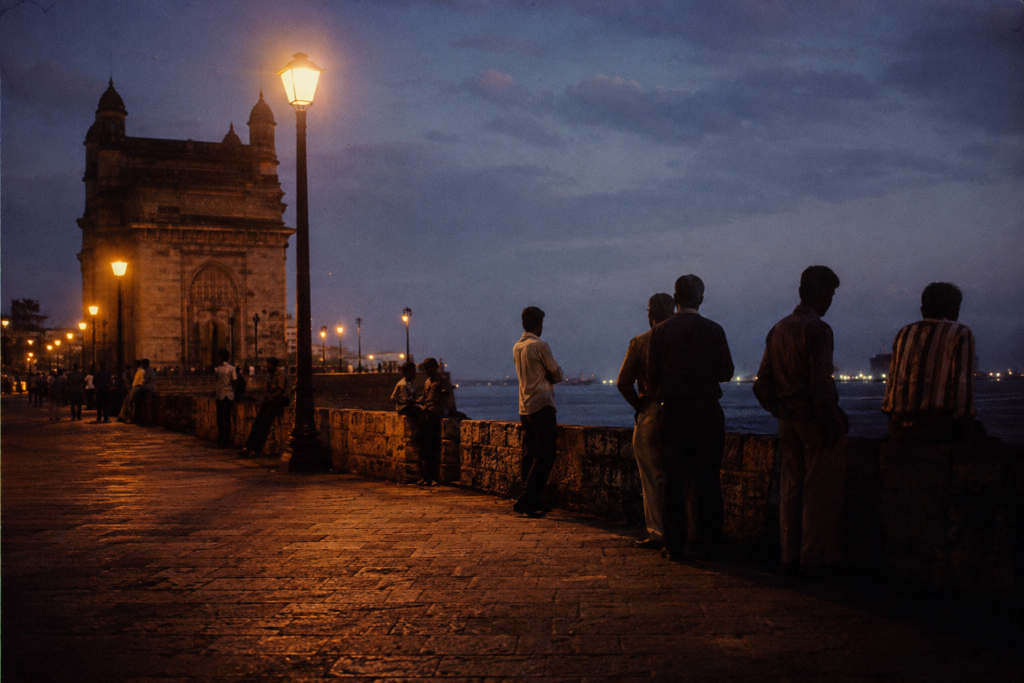
The Stone Walls by the Sea
Near the Gateway of India, along the old promenade and its weathered stone walls, small groups gathered as the evening settled in. Some were there to meet old friends. Some were hoping, quietly, to meet someone new. Many simply wanted a few hours in a place where they didn’t have to edit themselves.
Those walls have no plaque and appear in no tourist guide, but for a generation of queer Mumbaikars, they hold something the history books never got around to recording — the start of friendships that outlasted decades, romances that came and went, and the first, tentative sense of belonging to something larger than oneself.
Voodoo: A Nightclub That Meant More Than Music
Later in the night, many made their way to Voodoo, a nightclub remembered by countless members of the community as far more than a venue for dancing.
For a few hours inside those walls, people describe something close to weightlessness — music loud enough to drown out the week’s caution, laughter that didn’t have to be quiet, and the rare, disorienting freedom of moving through a room without performing an identity for anyone else’s comfort.
By the time the sun rose, that freedom folded itself back into ordinary life. Students went back to their hostels. Office workers went back to their desks. Married men went back to families who had no idea where the previous night had taken them. The city woke up entirely unaware of the lives that had quietly intersected within it hours earlier.
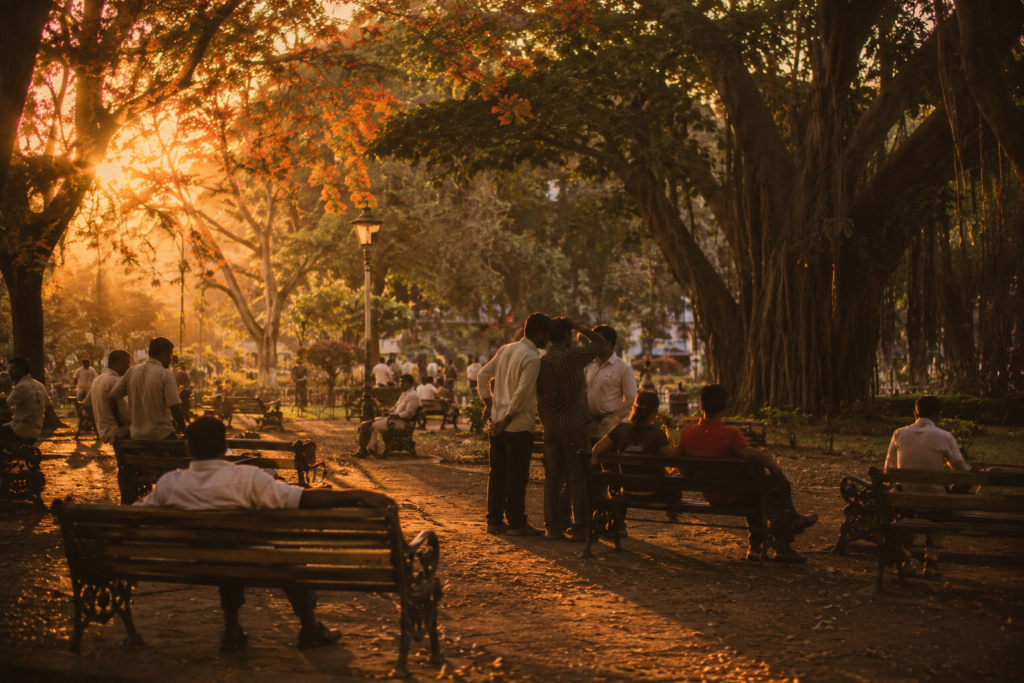
Sunday Evenings at Maheshwari Udyan
If Saturday belonged to the trains and the nightlife, Sunday belonged to Maheshwari Udyan, the public garden near King’s Circle.
From roughly five in the evening onward, familiar faces began to gather — some arriving alone and visibly nervous, some arriving in groups, some returning for the tenth time, some there for the very first. Regulars made a habit of welcoming newcomers with nothing more than a smile, an introduction, a seat on the same bench.
Phone numbers were exchanged. Plans for the following weekend were made. People who had spent the week convinced they were the only ones like themselves in the entire city discovered, simply by looking around a public garden, that they were not.
The garden was never officially anything. But unofficially, for years, it functioned as something closer to family.
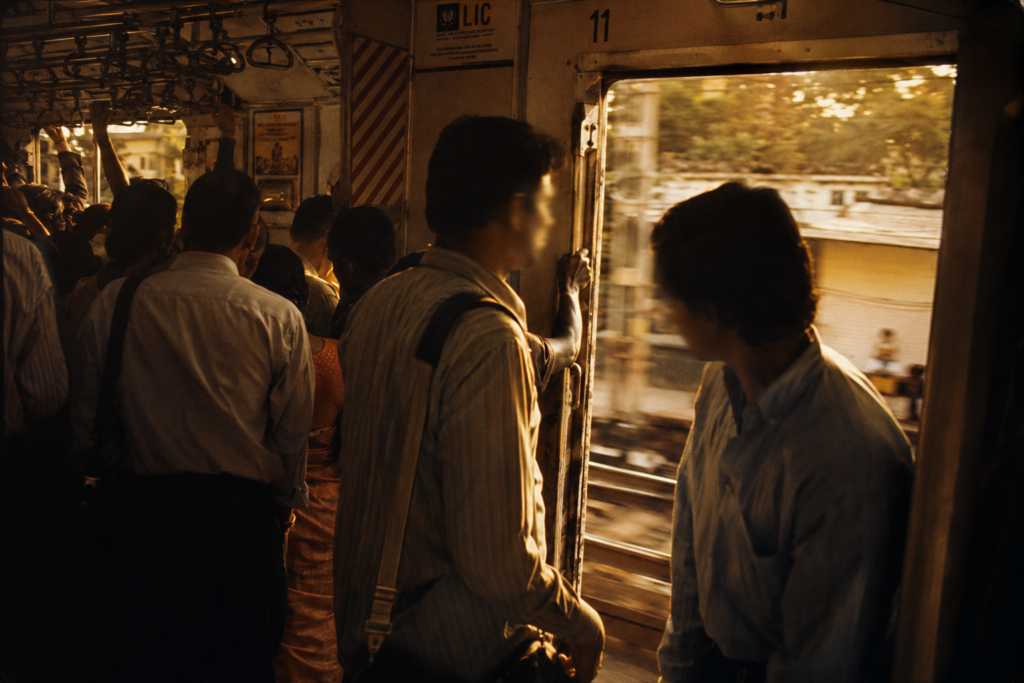
The “2 by 2”: A Code Written in a Train Carriage
Of all the informal institutions that made up this hidden geography, none is remembered quite as vividly — or as precisely — as the “2 by 2.”
The name referred to a very specific location on Mumbai’s suburban local trains: the second coach from the Churchgate or CST end of the train, and the second doorway of that coach. Nothing marked it. No signage, no announcement, no official designation of any kind. It was simply understood, within certain circles, that this particular doorway on this particular coach was where you might find someone like yourself during the crowded chaos of rush hour.
In a city with almost no safe, explicit way for gay and bisexual men to identify one another, the 2 by 2 became a functioning, if entirely unofficial, meeting point — sustained through eye contact, subtle gestures, and a shared, unspoken understanding that outsiders would never notice. It has since been referenced in journalism, memoirs, and academic studies of queer life in urban India, less as a curiosity than as evidence of how resourceful a community becomes when the world leaves it no other options.
The 2 by 2 sat alongside Maheshwari Udyan, the Gateway promenade, and a handful of railway stations and parks as part of a wider, coded map of the city — a map that existed only in the memories of the people who used it, redrawn and passed on by word of mouth because it could never be written down.
Some who remember the code say a faint trace of the practice persists even now. But its cultural weight has largely receded, absorbed by the dating apps, community organisations, and Pride events that replaced the need for a stranger’s glance across a train doorway.
What Changed, and What Shouldn’t Be Forgotten
Technology arrived. Dating apps made connection instant. The decriminalisation of homosexuality in India changed what could be said in daylight. One by one, the old gathering points quietly emptied out, their purpose absorbed by a smartphone screen.
But something is at risk of being lost along with the inconvenience these places represented.
This is not really a story about a nightclub, a garden, or a train carriage. It is a story about a generation that built a community out of nothing but trust, risk, and each other — without a hashtag, an app, or a single line of code to help them. Every Pride march that moves through Mumbai’s streets today does so on ground first claimed, quietly and without permission, by people who simply refused to be alone.
❤️ Were You There?
Did you spend Saturday nights riding the locals toward Gateway, the old stone walls, or Voodoo?
Did Sunday evenings at Maheshwari Udyan become part of your life?
Do you remember the 2 by 2?
Share your memories with The Rainbow Republic. Mumbai’s queer history deserves to be remembered — together.
— The Rainbow Republic